
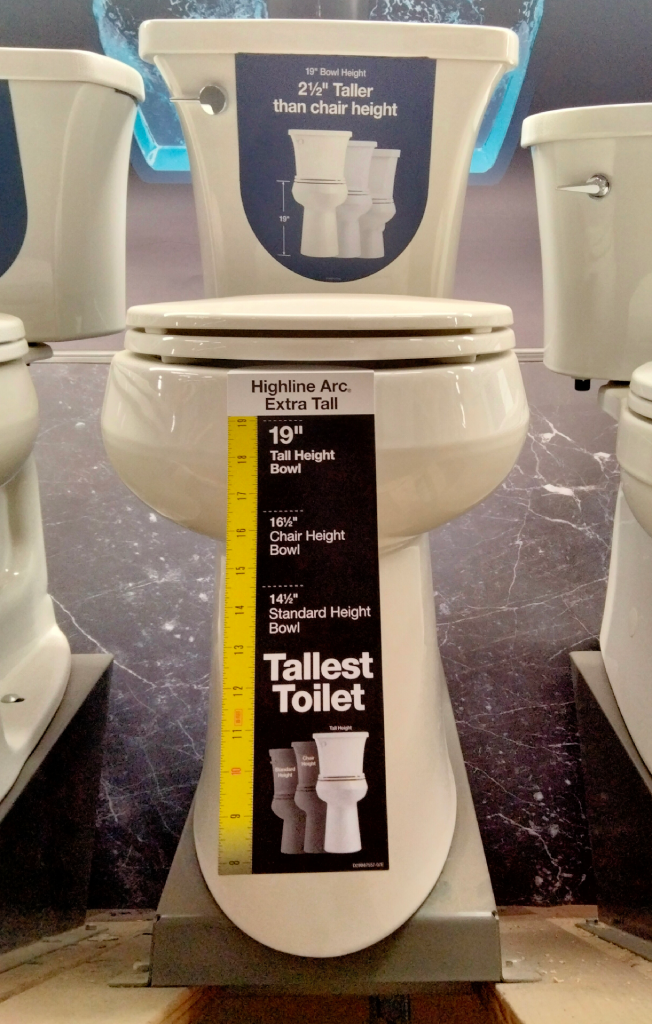
 In the picture (right), you can see an extra tall toilet, a full 4-1/2” taller than a standard toilet in height.
An extra tall toilet seat, often called a "comfort height" or "chair height" toilet seat, offers significant health advantages primarily related to mobility, safety, and reduced physical strain. These benefits make using the bathroom easier for individuals with certain physical challenges.
Key Health Advantages
- Reduced Strain on Joints: The primary benefit is minimizing the strain on the knees, hips, and back by reducing the distance one must squat when sitting down or the effort required to stand up. This is particularly helpful for people with arthritis, chronic joint pain, or muscle weakness.
- Increased Safety and Fall Prevention: Bathrooms are high-risk areas for falls. The higher seating position provides better stability and balance when transferring between sitting and standing, which significantly lowers the risk of accidents, especially for seniors or those with balance issues.
- Improved Independence and Dignity: By making the process of using the toilet unassisted, a raised seat allows individuals with mobility limitations to maintain their independence and privacy, which can boost confidence and emotional well-being.
- Easier Post-Operative Recovery: For those recovering from surgeries, such as hip, knee, or spinal procedures, an elevated toilet seat is often recommended by occupational therapists to accommodate restricted movement and reduce pain during the healing process.
- Benefits for Taller Individuals: People who are taller than average often find standard toilets uncomfortably low. An extra tall seat provides a more natural, ergonomic seating position, preventig discomfort and awkward posture.
- Easier Caregiver Assistance: For individuals who require help, the taller height also makes it easier and safer for caregivers to assist them without risking injury to themelves or the user.
Potential Disadvantages of Taller Toilets
It is worth noting that for some users, a very high seat may not be ideal. The higher angle can sometimes be less conducive to a natural squatting posture, which some research suggests can aid bowel function. Additionally, shorter adults or children may find their feet dangling, which could cause instability.
Consulting with a healthcare provider or an occupational therapist can help determine the ideal toilet height for specific needs.